
Why Most Restaurant Photos in Doha Don't Actually Sell the Food
Doha has more restaurant openings per month than almost any other category in Qatar, and most of them are shot the same tired way. Here's what actually gets someone to stop scrolling and order.
Open Instagram, search any restaurant or café hashtag in Doha, and scroll for thirty seconds. You'll see the same photo, more or less, over and over: a plate shot from directly above, slightly too dark, sitting on a marble look table with a phone's flash bouncing off the sauce. It's not that the food is bad. Most of the time the food is genuinely good. It's that the photo is doing nothing to make a stranger scrolling at 11pm feel hungry.
This matters more in Doha's F&B scene than almost anywhere else, because the category is so crowded. New concepts open constantly, burger spots, karak cafés, fried chicken brands, home kitchens turning into delivery only ghost kitchens and almost all of them are competing for the same eyeballs on the same three apps. When the photography looks identical across twenty competitors, price and delivery speed become the only differentiator left and that's a race to the bottom nobody wants to be in.
What's actually wrong with the average restaurant photo
It's rarely the camera. Most phones today can produce a sharp, well exposed image without much effort. The problems that actually cost a restaurant business are almost always about decisions made before the shutter clicks:
- The lighting doesn't match how the food is meant to feel. A cheesy, dripping burger and a delicate plated dessert need completely different light. Hard, high contrast light makes grease and texture look appetizing. Soft, even light does the opposite, it flattens exactly the thing that was supposed to look indulgent. We see the same lighting setup used for both, constantly and it's why a lot of "professional" food photography in this market still looks flat.
- There's no consistent color story across the feed. One photo is warm and orange, the next is cool and blue white, because they were shot on different days with different ambient light and never color matched. A feed like that doesn't build brand recognition, no matter how good any single photo is. When we shoot monthly content for Someburg, the color grade is locked from day one specifically so a customer can recognize the brand from the photo alone, without needing to see the logo.
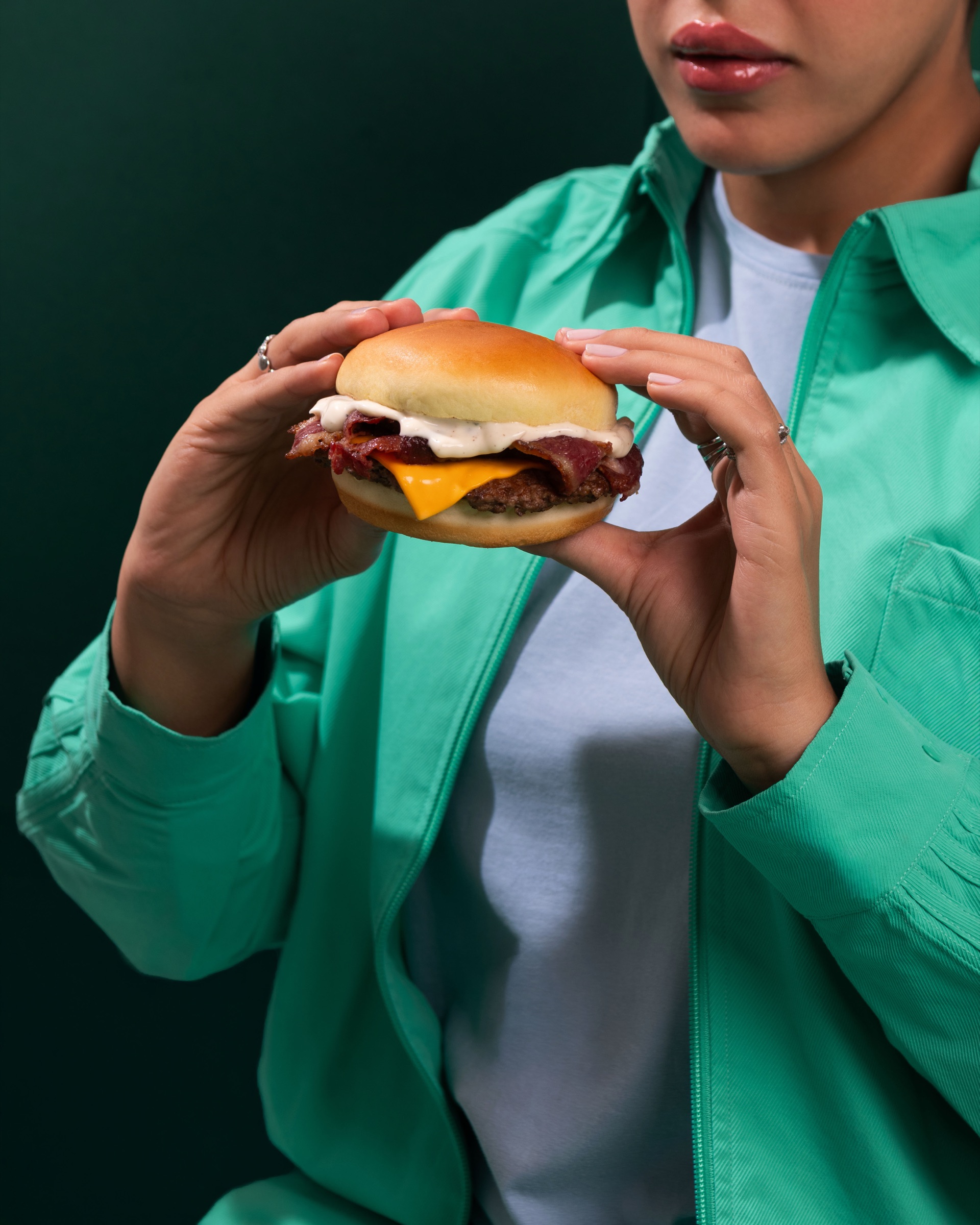
- The styling doesn't show what's actually being sold. A burger photographed closed, from a distance that hides the layers, tells a customer nothing about why this burger is worth ordering over the one from the place next door. The cross section shot, the pull apart shot, the steam, these aren't decoration, they're the actual sales argument and skipping them is why some genuinely great food underperforms online against food that's average but photographed to show its best angle.
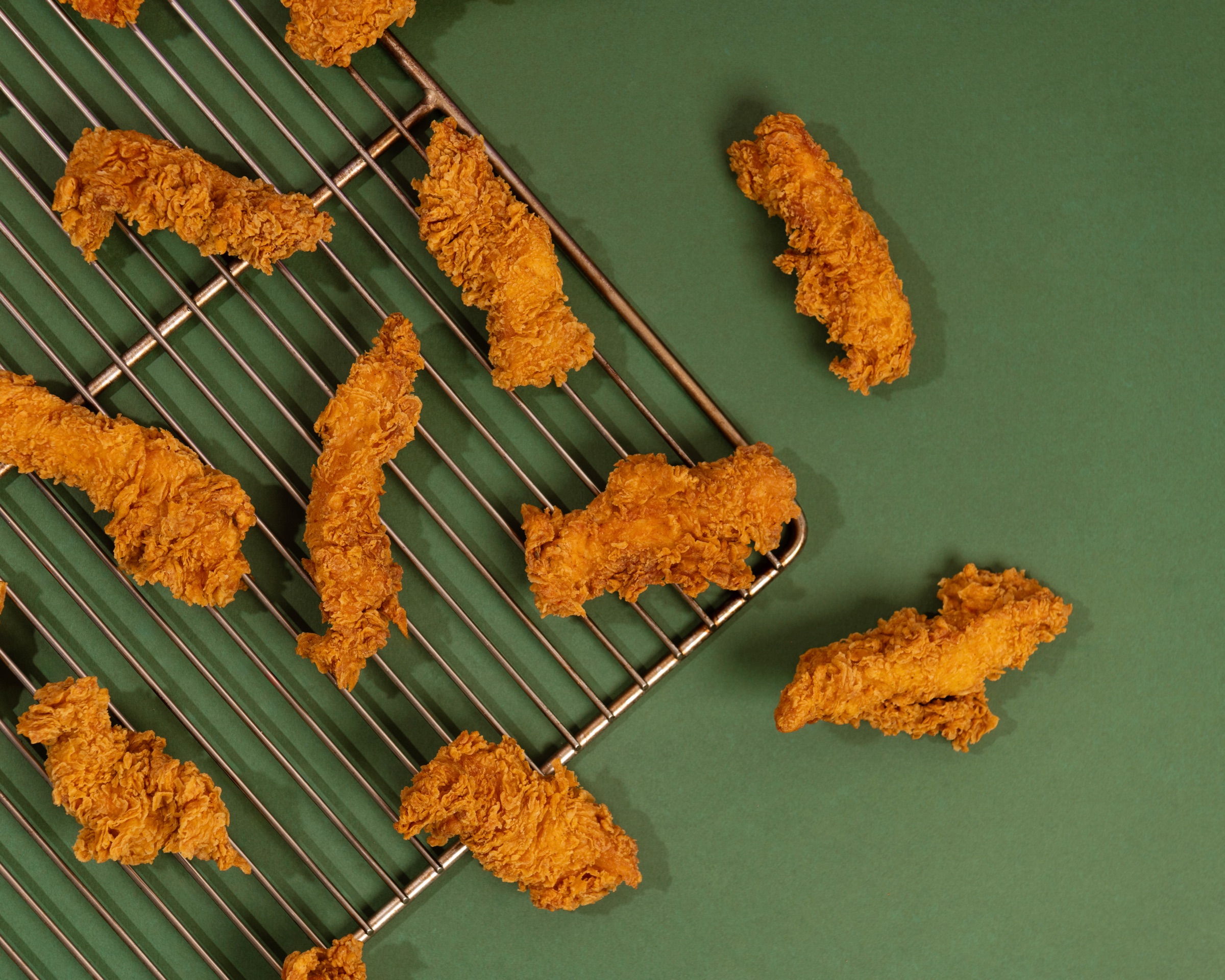
- Bold color backdrops get skipped in favor of "safe" neutral ones. Neutral backdrops are the default because they feel safe but on a crowded Instagram grid or delivery app thumbnail, safe is invisible. For Mashoub's chicken photography, we shot on bold, saturated color backdrops specifically because a thumbnail has to win a fight against a dozen other thumbnails in under a second and a bright, high contrast backdrop wins that fight against beige every time.
Photos and video are answering different questions, and both need answering
A still photo answers "does this look good." A short video answers "what does this actually feel like to eat", the crunch, the steam, the pull of melted cheese. Restaurants that only invest in stills are leaving half the sale unmade, because a lot of appetite appeal is motion, not composition. This is part of why we don't treat photography and video as separate bookings for food brands: the same styling and lighting decisions carry across both and a customer scrolling through a feed sees stills and reels back to back, not as two separate portfolios.
Go Crispy's brand film is a useful example of the other end of this, a cinematic spot built like an actual campaign, not a quick social clip, because the brand needed to establish a feeling (cinema, indulgence, a specific mood) that a single photo can't carry on its own. Not every restaurant needs that scale of production but every restaurant is making a choice, consciously or not, about what feeling its content is supposed to create.
The monthly content trap
A lot of restaurants in Doha book one big photoshoot when they launch, use those same twelve photos for a year and wonder why engagement drops off after the first few weeks. It drops off because the audience has seen the same images repeatedly and menus change, seasonal items rotate and a feed that stops updating looks like a business that's stopped paying attention. Lyfe's monthly food photography exists for exactly this reason, a health focused meal brand with a rotating menu needs a steady rhythm of new content, not a one time shoot, because the content has to keep pace with what's actually being sold that month.
What this means if you're opening or running a restaurant in Qatar right now
You don't need a huge production budget to fix most of this. You need someone thinking about lighting that matches the food, a color grade that's consistent from post to post, styling that actually shows the thing you're proud of and a shooting cadence that matches how often your menu changes. That's a production and creative direction problem, not a bigger budget problem, plenty of the most scrolled past restaurant content in this city was shot on decent equipment by someone who never stopped to ask what feeling the photo was supposed to create before pointing the camera at the plate.
The restaurants winning attention in Doha right now generally aren't the ones with the biggest ad spend. They're the ones whose content looks like it belongs to one consistent brand, shot by someone who understood what they were actually trying to sell before the food ever hit the table.
Working on something in Qatar?
We handle branding, web, photography, video, 3D and marketing out of one studio in Lusail — so the work stays consistent across every place your brand shows up.